Exhibitions
Permanent presentations in the Netherlands
Olaf Stevens exhibition space
Galerie Eind 40
Eind 40
Gorinchem - The Netherlands
Telephone: +31 (0)183 634 794 ( by appointment )
E-mail: olaf@euronet.nl
From April 24th 2010 there will be an exhibition on glass, porcelain and graphics . please contact for detailed information
Kunstuitleen Gelderland
Kerkstraat 19
6811 DL Arhhem - The Netherlands
Telephone: +31 (0)26 445 3617
SBK Kunstcentrum Haarlem
Gedempte Oude Gracht 117-121
2011 GP Haarlem - The Netherlands
Telephone: +31 (0)532 78 95
E-mail: sbkhaarlem@netland.nl
Kunstuitleen Gouda
Blekerssingel 40
2806 AB Gouda - The Netherlands
Telephone: +31 (0)182 522746
E-mail: info@kunstuitleengouda.nl
International Gallery Contacts
Barcelona
Gallery ESPAI VIDRE
Carrer dels Angels, 808001 Barcelona, Spain
Tel/Fax 00 34 933189833
Boston
Chappell Gallery, 14 Newbury Street, Boston,MA 02116, U.S.A.
Tel. 617.236.2255 / 212.414.2673
Email: amchappell@aol.com
New York
526 West 26th street, Gallery 904, New York, NY 10001, U.S.A.
E-mail: amchappell@aol.com
Work represented in Dutch Museum collections
The Netherlands
Museum Boymans van Beuningen, Rotterdam
Stedelijk Museum Schiedam, Schiedam
Museum "HetPrinsessenhof", Leeuwarden
National Glassmuseum, Leerdam
Stedelijk museum Gorinchem
Work represented in international Museum collections
Taipei Fine Arts Museum,Taipei,Taiwan
Everson Museum of art, New York, U.S.A
Glasmuseum Ebeltoft, Ebeltoft, Danmark.
The process of translating the designsinto Crystal.
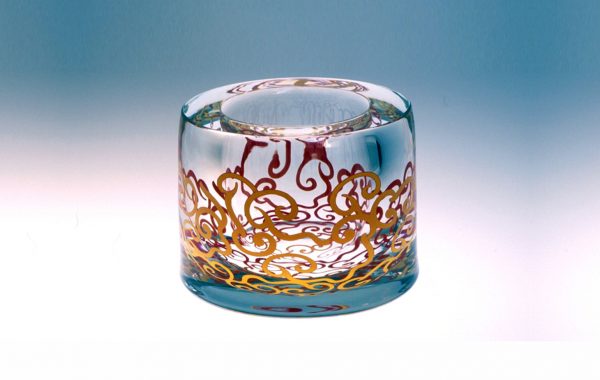
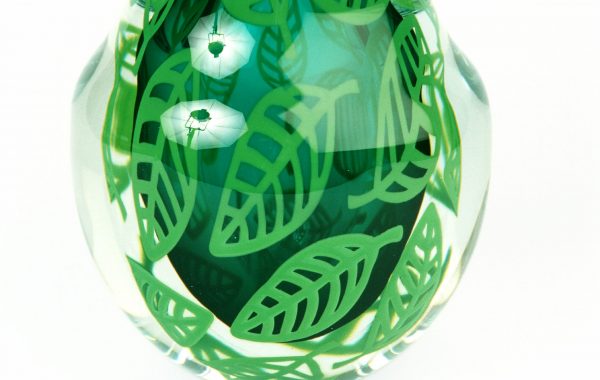
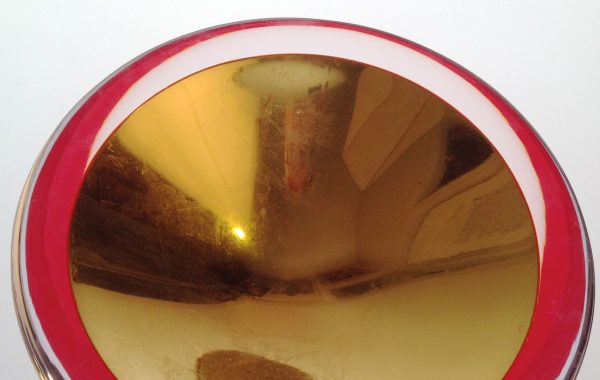
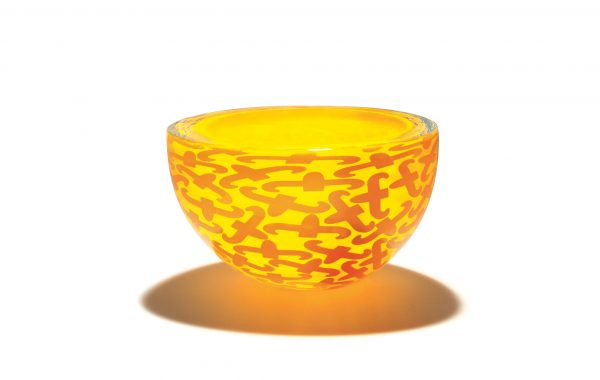
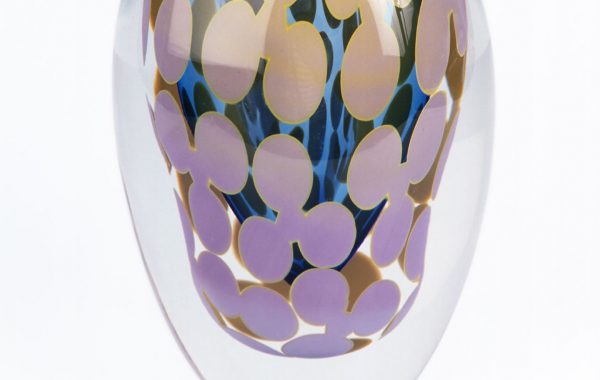
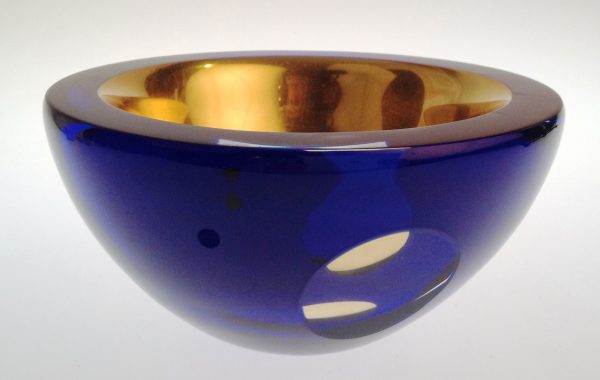
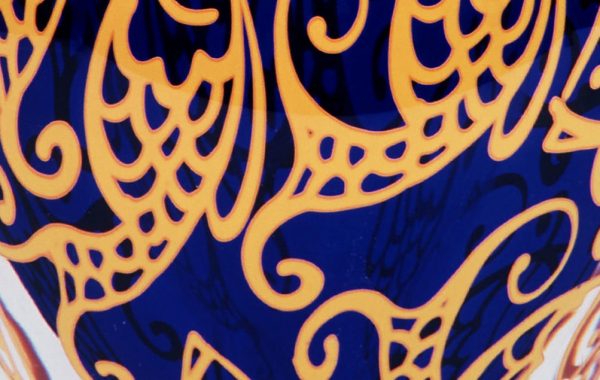
Each object is a product of skilled handicraft. Stevens achieves his singular effects by a labour-intensive technique in which each piece is built up out of several layers and in several processes. First, the molten glass is blown into a basic shape; this is then coated with another, coloured layer of glass. After cooling, the decorative ornamentation is ground into this thin outer layer by hand, then the still basic, though worked-on form is heated to melting-point again and coated with further layers of glass which are in turn ground and otherwise worked on, according to the complexity of decoration desired. In succeeding processes of this kind, then, these literally many-layered objects are shaped, and only after the final melting, blown to their final form. In the finishing processes, following cooling, the glass bodies are cut open and the edges ground and polished, leaving perfect surfaces. A comparable technique is not to be found even at the history-endowed glass workshops of Murano. The multi-coloured, three-dimensional decors and their reflections on the different layers of glass create visual effects never seen before. The heavy, solid glass and the contrast between archetypal form and capricious decoration lends the objects an appearance all their own. The influence of ceramic design always tells in Olaf Stevens work, starting out as he does even in glass, from simple shapes that look as if they had been turned on the potter wheel. But when he puts his hands to applying decor into cut glass, it becomes evident how rigorously and with what astute vision he draws out the specific potential of the material, glass. Numerous international exhibitions and publications pay tribute to his work in the fine arts, including museum exhibitions in Madrid, Linz, Helsinki, Taipe and Baltimore.